Trenches That Stay Open Until Backfill
Trenching in Elverta for irrigation line installation and drainage correction on clay-heavy parcels
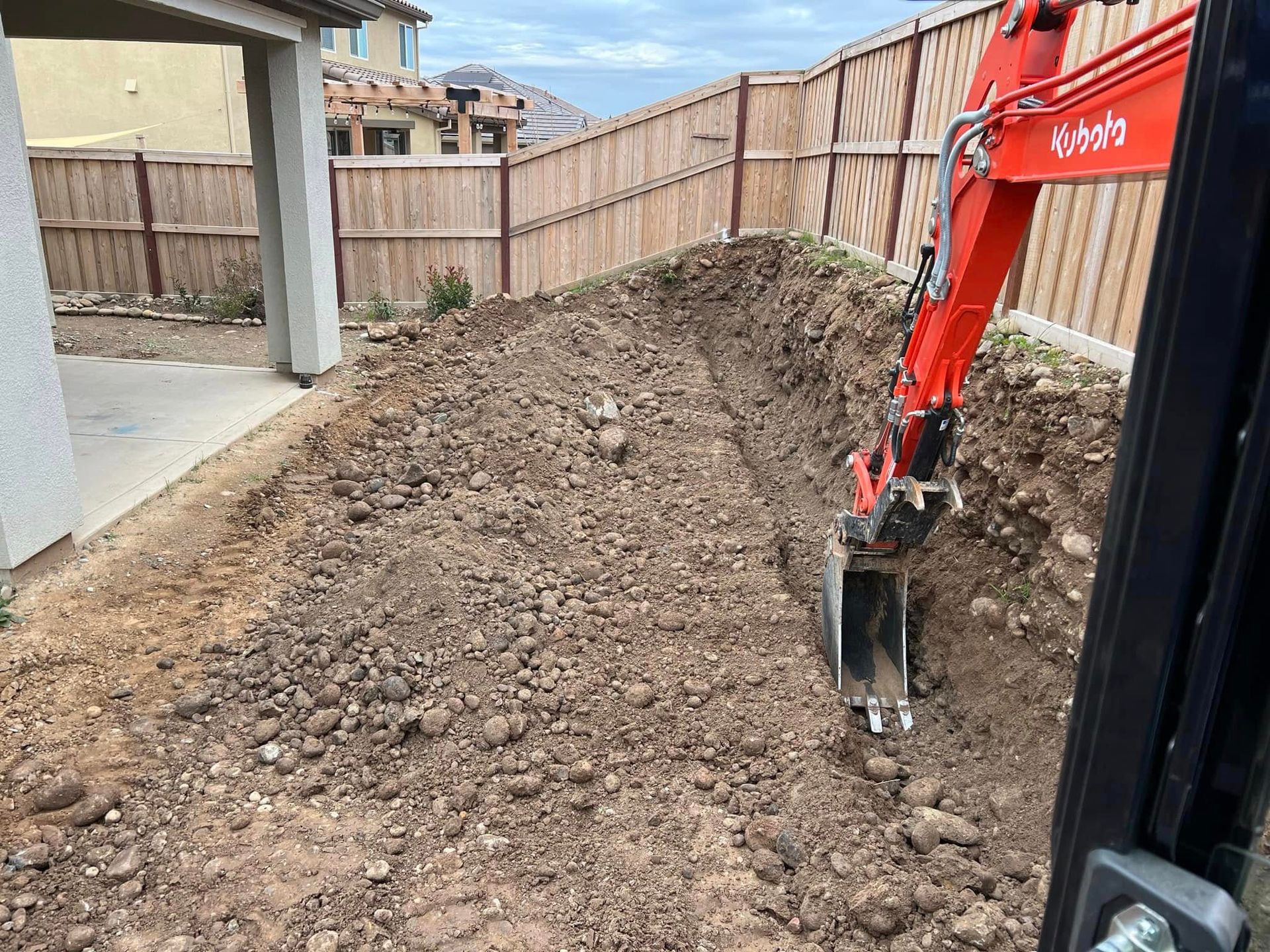
Sacramento Valley's clay-loam soil creates trench wall collapse risk during irrigation line installation and drainage correction work, especially when backfill gets rushed before walls stabilize. Peyton Land Management monitors trench wall stability throughout the excavation to prevent collapse that buries new lines or forces expensive re-excavation. Clay-heavy conditions across the Greater Sacramento area require careful attention to soil behavior that general excavation crews working on tight schedules routinely skip.
Trenching for irrigation or utility lines involves cutting a clean path through soil layers, installing the line or pipe, then backfilling once the trench walls show no signs of slumping or lateral movement. In Sacramento Valley clay-loam, walls can shift hours after excavation as soil moisture redistributes, which means monitoring continues until backfill begins rather than assuming walls will hold just because the trench looks stable at first cut.
Arrange an on-site consultation to review your irrigation layout or drainage plan and confirm equipment access to the work area.
Why Clay-Loam Soil Changes the Trenching Process
Clay soil holds moisture longer than sandy or loamy soils, and that moisture content directly affects how trench walls behave after excavation. When a trench gets cut through clay-heavy Sacramento Valley soil, the walls may appear stable immediately but can slump inward as the clay dries or as residual moisture migrates toward the open trench, particularly during summer months when soil moisture gradients shift rapidly.
Once backfill completes and compaction finishes, you'll notice the new irrigation line delivers water evenly without low spots that indicate collapsed sections, and drainage trenches move runoff away from structures without ponding or reverse flow caused by uneven grading. Properties that previously dealt with standing water after storms or uneven irrigation coverage now function as designed because the trench itself was protected through the entire installation process.
The service includes excavation,
wall monitoring, and backfill compaction, but does not include the irrigation components themselves or utility line materials, which you source separately or through your contractor. Trench depth and length affect project duration, and equipment access requirements get confirmed during the site review to avoid delays once work begins.
Common Questions About This Service
Agricultural and residential property owners often ask about the technical side of trenching before starting their projects.
What causes trench walls to collapse in Sacramento Valley soil?
Clay-loam soil common in Elverta and surrounding areas retains moisture in layers, and when a trench exposes those layers to air, moisture migrates toward the opening and softens the wall structure, which can lead to slumping if backfill happens before the wall stabilizes.
How long does wall monitoring take before backfill can start?
Wall stability depends on soil moisture content, trench depth, and current weather conditions, but monitoring typically continues for several hours after excavation to confirm no lateral movement occurs as the soil adjusts to the open trench.
What equipment gets used for residential versus agricultural trenching?
Residential trenching for irrigation or utility lines uses compact excavators that minimize surface disturbance and fit through standard gate access, while larger agricultural projects may require ride-on trenchers that cut faster through long runs but need wide equipment access.
When should I schedule trenching work on my property?
Spring and fall provide the best soil conditions for trenching in the Sacramento Valley, when soil moisture sits between winter saturation and summer drought, which reduces both collapse risk and dust generation during excavation.
How much does trenching cost per linear foot?
Cost varies with trench depth, soil conditions, equipment access difficulty, and whether the job includes just excavation or also backfill and compaction, so pricing gets calculated after the site review confirms project specifics.
Peyton Land Management operates with licensing and soil-aware processes designed for Sacramento Valley conditions. Contact the office at (916) 502-7534 to confirm current equipment availability and discuss your trenching project requirements.